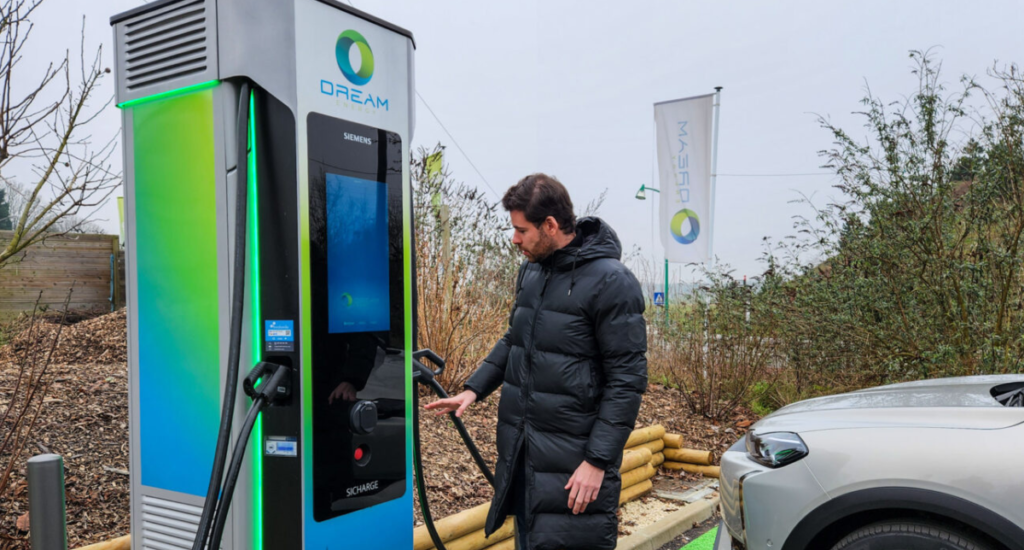
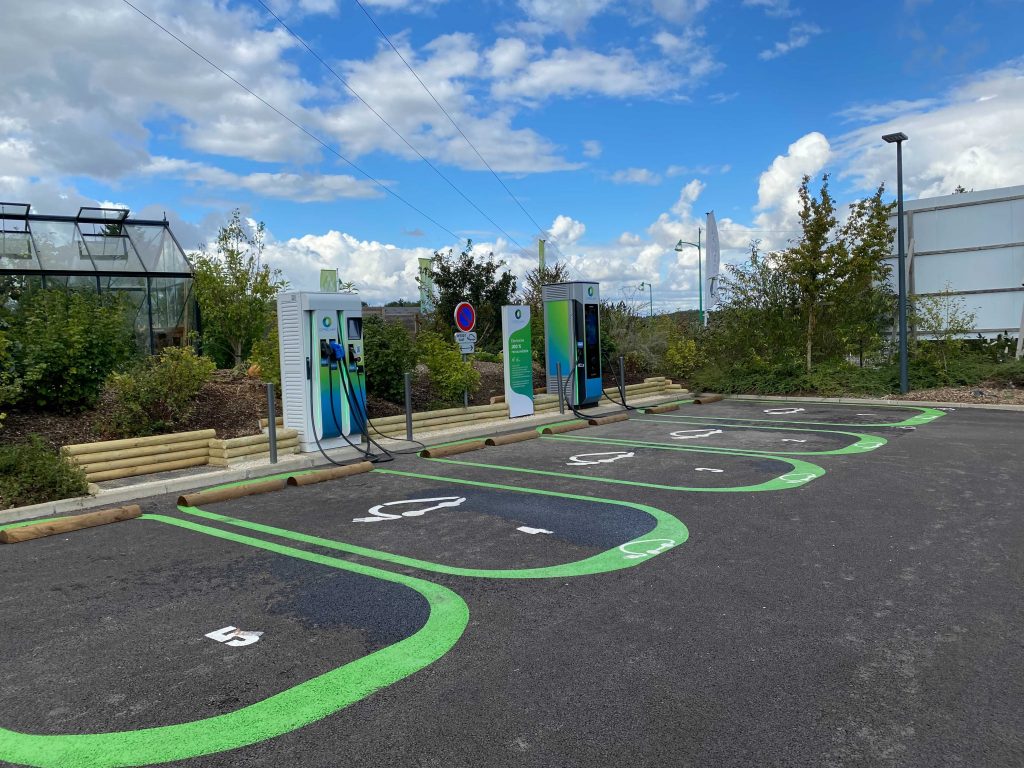
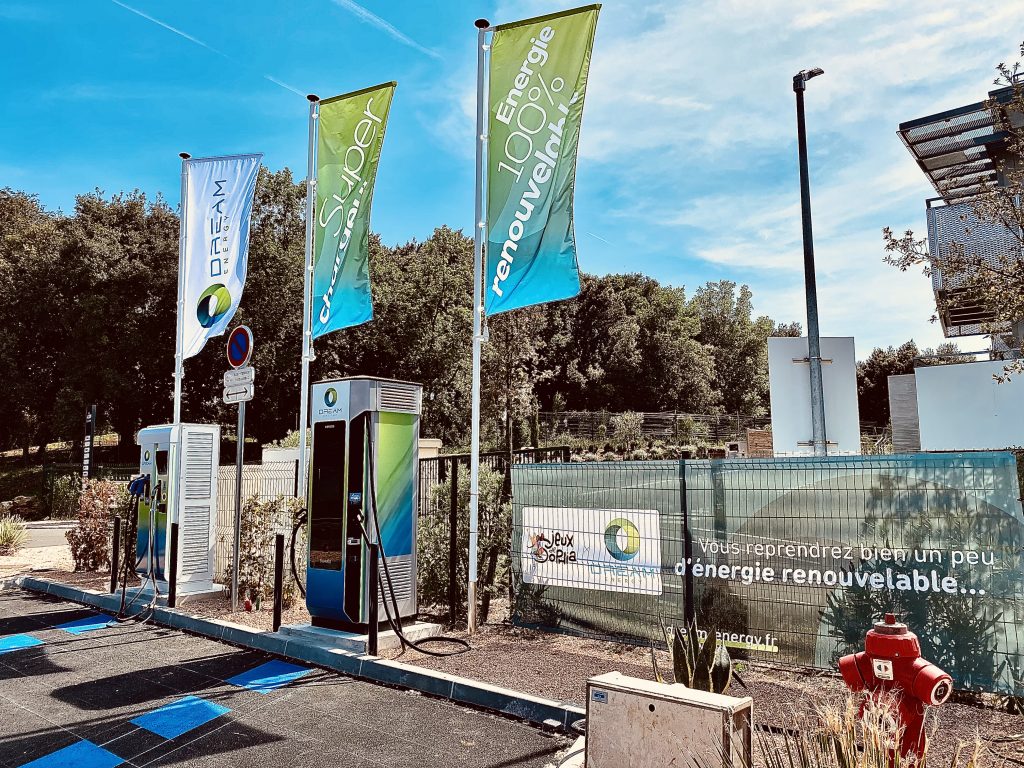
Installing charging stations in a parking lot seems simple on paper. You identify a few spots, hook them up, install the stations, and customers can charge their vehicles while they’re shopping, attending appointments, or staying for a visit.
In reality, the issue quickly makes its way to the desks of real estate, financial, or technical managers, raising a much more concrete question: who is funding what?

For a retail business, hotel, real estate company, or parking lot owner, installing charging stations is a clear opportunity. It is a service that electric vehicle drivers expect, a way to boost a location’s appeal, and sometimes even a means of increasing the value of a real estate asset.
But it is also a project that involves costs, operational decisions, maintenance, an electrical connection, careful consideration of the price per kWh, and, above all, a business model that must be fully understood from the outset.
So, should you buy your own charging stations? Go through a service provider? Rent the infrastructure? Or opt for a third-party investment model? Here are the key points to keep in mind before getting started.
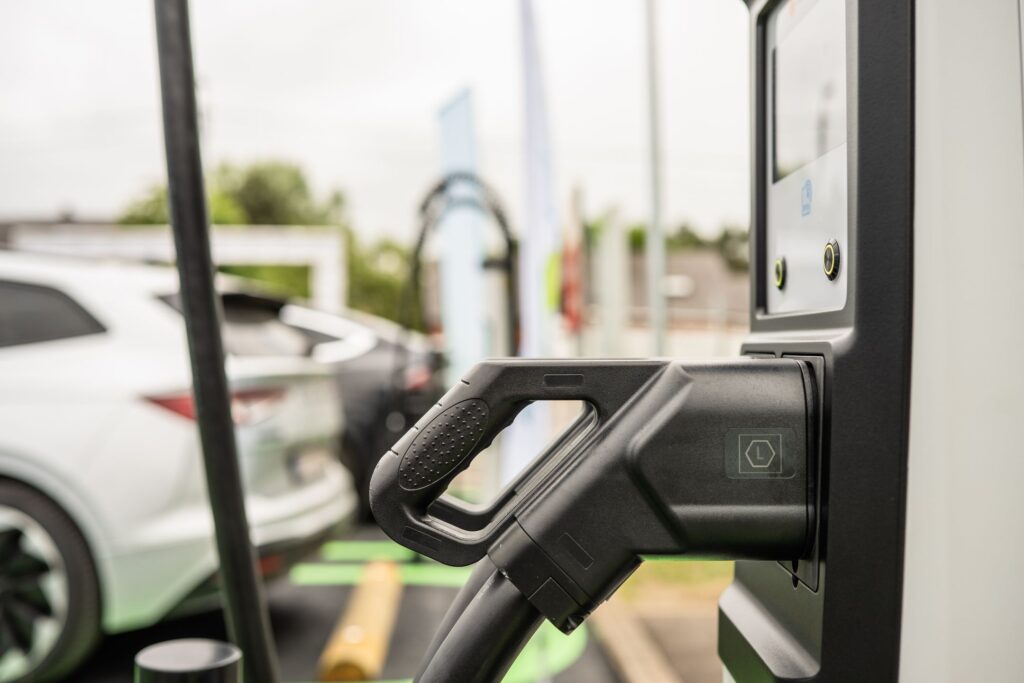
A charging station is more than just a charging station
This is often the first mistake in the analysis. People talk about “charging stations,” but the actual cost of a charging project isn’t limited to the equipment visible in the parking lot.
A complete project typically consists of several components.
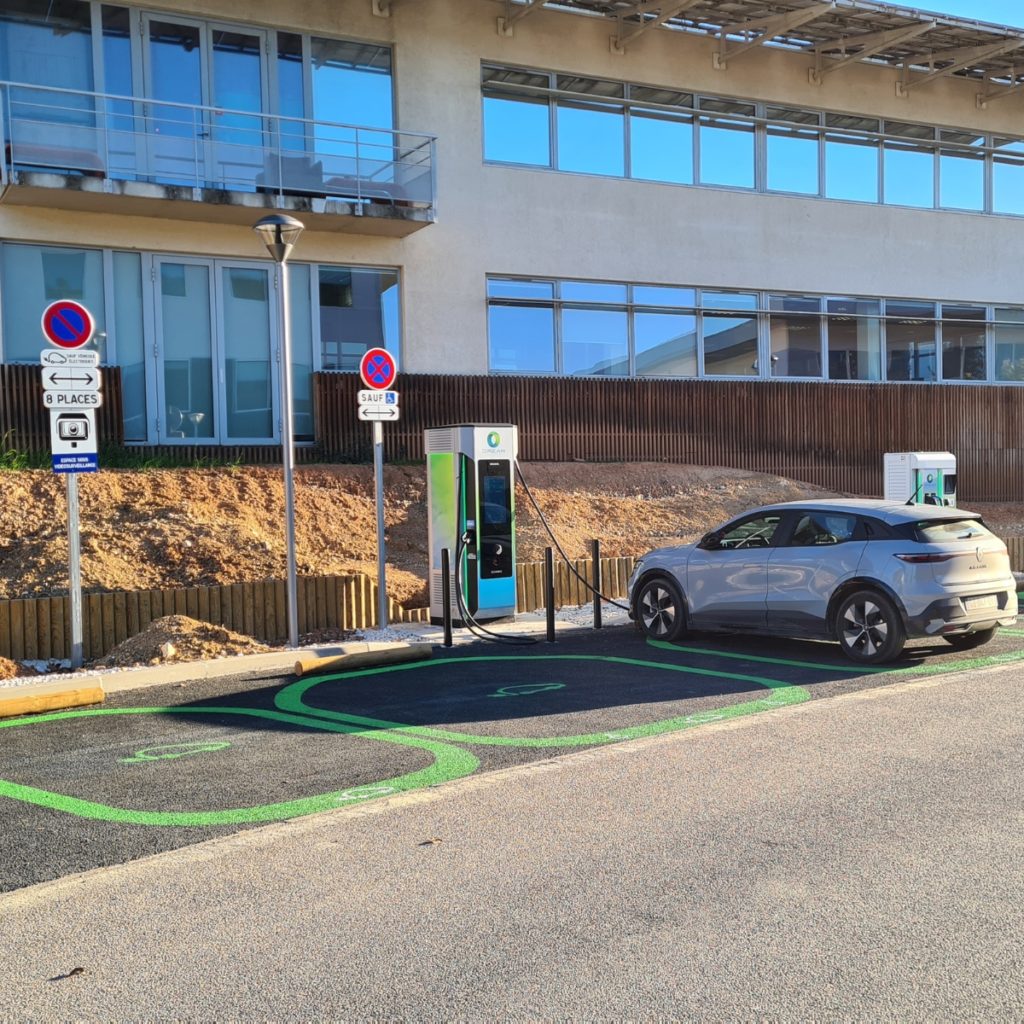
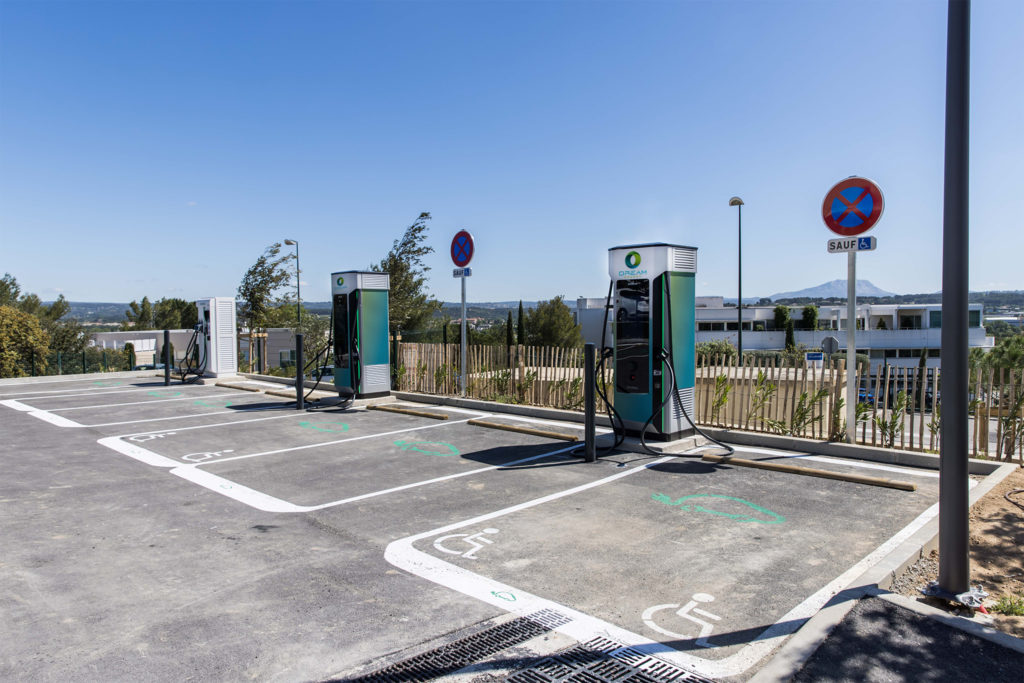
First comes the installation: the charging stations, construction work, civil engineering, utility connections, wiring, signage, and sometimes power upgrades. This is often the most visible part of the process, but it’s also the one that requires the most planning.
Then there’s operations: monitoring, maintenance, user support, updates, payment methods, incident management, and station availability. A charging station is only valuable if it works, is easy to use, and inspires confidence in drivers.
Finally, there’s electricity. And this is likely the most strategic factor in the long term. The price per kWh, its source, its stability, and its ability to remain competitive can make all the difference in the user experience.
That is why a charging project should not be viewed solely as a technical expense. It is a matter of infrastructure, service, and energy.
Purchasing model: retain control, but bear the investment costs
The first model involves purchasing the charging stations directly and financing the project yourself. This is a traditional investment approach, often referred to as CAPEX.
In this case, the site owner or operator covers the initial investment. They become the owner of the infrastructure and retain greater control over their equipment.
This model may be suitable for organizations that already have a well-defined energy strategy, teams capable of managing the project, and a commitment to integrating charging infrastructure into their real estate portfolio.
But it also comes with several challenges. The initial cost can be high, especially when major construction work or a more powerful connection is required. You also have to manage maintenance, monitoring, user relations, potential outages, billing, and the evolution of the service over time.
In short: buying your own charging stations can give you control, but it requires either taking on the full responsibility of operating them yourself or relying on partners who can do so.
Third-party investment model: offering a service without bearing the entire burden of the project
The other model involves entrusting the financing, installation, and operation to a specialized operator. This is often referred to as third-party investment.
In this case, the business, hotel, real estate company, or parking lot owner provides the site. The operator handles all or part of the project: planning, investment, installation, connection, operation, maintenance, and supervision.
This model is particularly appealing to websites that want to offer a high-performance top-up service without tying up significant cash flow or having to build in-house technical expertise.
It also speeds up the process, since the operator is already familiar with the various stages of deployment: feasibility, power requirements, selection of charging stations, construction oversight, and day-to-day operations.
For a commercial site, the benefits are clear: offering a new service to customers, making the parking lot more appealing, and keeping pace with changing trends—all while partnering with a company that specializes in this field.
Electricity: a topic that is all too often underestimated
In an EV charging project, there’s a lot of talk about charging stations. There’s less talk about the electricity itself. Yet it is the electricity that determines much of the long-term experience.
A driver doesn't just check to see if a charging station is there. They check to see if it's available, if it charges quickly, if the price is reasonable, and if the energy offered meets their expectations.
For sites that host charging stations, the key question is therefore: What type of electricity powers the charging process? At what cost? And how stable is the supply over time?
This is where Dream Energy’s integrated model truly comes into its own. As a producer of renewable electricity, a supplier, and a charging station operator, we don’t just install charging stations. We integrate charging into a broader energy ecosystem that combines infrastructure, operations, and green energy.
This approach makes it possible to offer fast charging powered by renewable electricity at a sustainable and competitive price. For a business or a public facility, this makes a significant difference: charging is no longer just an additional piece of equipment, but a service that aligns with the goals of the energy transition.
Retail, hotels, real estate: the right model depends on the location
There is no one-size-fits-all solution. The right choice depends on the type of site, its traffic volume, its location, the available land, the available electrical power, and the role that charging is expected to play.
For a shopping center or a grocery store, charging can be a valuable customer service offering. The charging time often coincides with the time spent in the store. A well-placed charging station can enhance the customer experience, drive foot traffic, and boost the venue’s reputation.
For a hotel, the logic is different. Charging meets a need for convenience and peace of mind. A guest traveling in an electric vehicle wants to know that they’ll be able to set off the next day with confidence or continue their journey without any unnecessary detours.
For a real estate investment trust or a property management company, the focus is more on asset management. Installing charging stations can help modernize a property, anticipate tenants’ expectations, meet ESG goals, and enhance a site’s appeal.
In any case, the question isn’t just: “How much does a charging station cost?”
The real question is rather: what service do we want to offer, with what level of performance, and under what business model?
What to Consider Before Making a Choice
Before launching a project, asking a few questions can help determine the right approach.
- Does the site already receive a significant amount of traffic?
- Do users stay long enough to recharge?
- Is the parking lot easily accessible, ideally 24 hours a day, 7 days a week?
- Does the electrical connection support fast or ultra-fast charging?
- Does the owner want to invest on their own, or would they prefer to work with a property manager?
- Should charging be an additional service or a real selling point?
These questions help us avoid focusing solely on installation costs. They allow us to consider the project in terms of its actual use.
A charging station that is poorly located, hard to see, or poorly managed will rarely be effective. Conversely, a well-designed, appropriately sized station powered by renewable energy can become a true destination service.
The Dream Energy Model: Invest, Install, Operate
At Dream Energy, we support owners of parking lots, retail spaces, hotels, local governments, and commercial complexes throughout the entire project lifecycle.
Our model is based on a simple belief: to accelerate the adoption of electric vehicles, charging must be both user-friendly and easy to understand for the host location.
We therefore provide services across a range of areas: feasibility studies, investment, installation, connection, operation, monitoring, maintenance, and the supply of renewable electricity.
The goal is not simply to install charging stations in a parking lot. It is to create a reliable, fast service that is consistent with the site’s intended use.
For retailers and property companies, this allows them to move forward without having to shoulder the technical and financial complexities of the project on their own. For drivers, this ensures fast, accessible charging powered by low-carbon energy.
In short: the right model is the one that serves its purpose
Installing charging stations is no longer a minor issue. For many locations, it is already a key factor in their appeal, an expected service, and a strong message to customers, visitors, or tenants.
But to make the project a success, you have to look beyond the terminal itself.
It is important to understand who is funding, operating, and maintaining the system, who is supplying the electricity, and how users will perceive the service.
That’s where choosing the right model becomes crucial.
For some stakeholders, purchasing their own charging stations may be the right choice. For others, partnering with a third-party operator may be a much better fit. The key is to develop a plan that aligns with the site, its intended uses, economic goals, and environmental objectives.
Electric charging isn't just about infrastructure. It's a service. And like any service, its value depends on its simplicity, reliability, and the quality of the energy that powers it.